Asphalt vs. Concrete: A Cost Comparison Guide
When planning a new driveway or commercial parking lot, the budget is almost always the deciding factor. Property owners want a surface that looks professional and functions well without breaking the bank.
Naturally, the most common question we hear during the planning phase is: is asphalt cheaper than concrete? The short answer is yes. Generally, asphalt paving costs significantly less upfront than a concrete installation. However, understanding why it is cheaper and how the long-term costs compare is essential for making the right decision for your property.
If you are ready to explore your options, our professional paving team can provide a detailed estimate tailored to your specific needs.
The Upfront Cost Difference
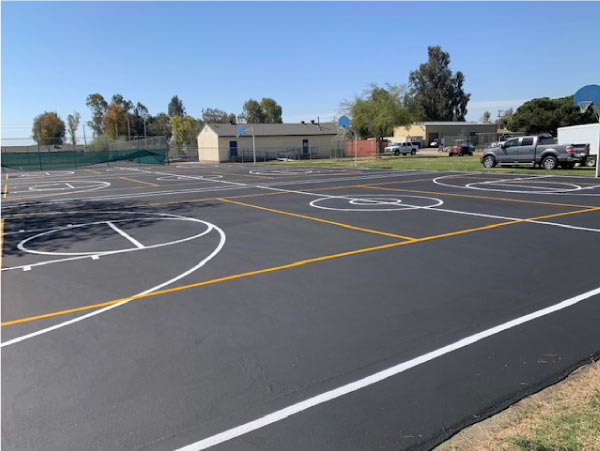
When you look strictly at the initial installation price, asphalt is the clear winner.
On average, an asphalt driveway or lot can cost 40% to 60% less per square foot than a comparable concrete surface.
This price difference allows homeowners and businesses to pave larger areas for a fraction of the cost. For example, if you have a long rural road or a large commercial facility, choosing asphalt over concrete can save you thousands of dollars instantly.
Why Does Asphalt Cost Less?
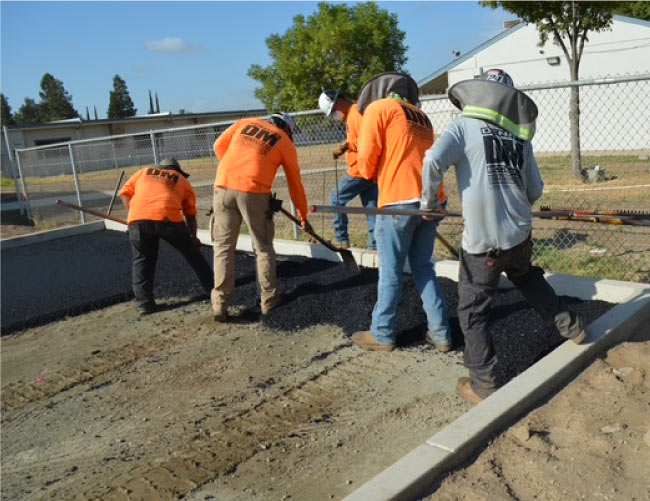
Two main factors drive the lower price of asphalt: materials and labor time. Asphalt is a petroleum-based product that is generally less expensive to produce in bulk than the cement required for concrete.
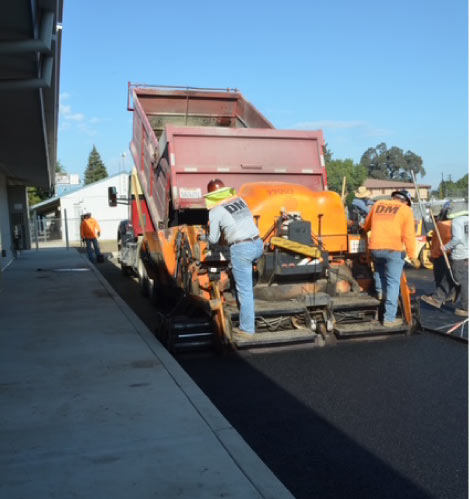
Furthermore, the installation process for a driveway or parking lot is much faster with asphalt.
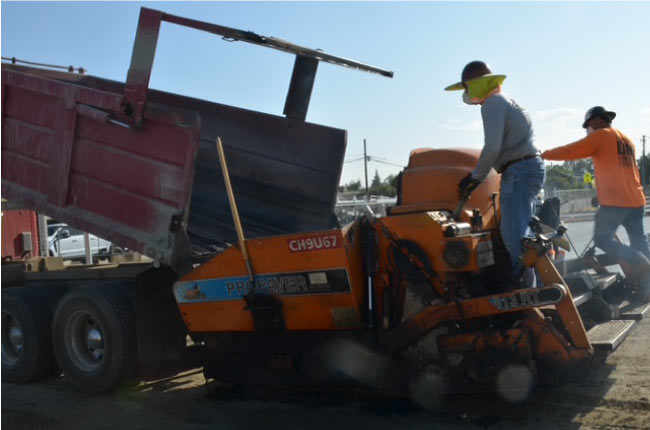
While concrete can take several days to pour and weeks to fully cure, asphalt can often be laid in a single day and driven on within 48 hours.
This efficiency reduces labor hours, saving you money on the final bill.
Long-Term Maintenance and Value
While the initial answer to “is asphalt cheaper than concrete” is a definite yes, you must also consider the long-term care. Concrete is often touted as a “set it and forget it” material, but when it cracks, the repairs are expensive and difficult to hide.
Asphalt requires more regular attention, but the maintenance is simple and affordable.
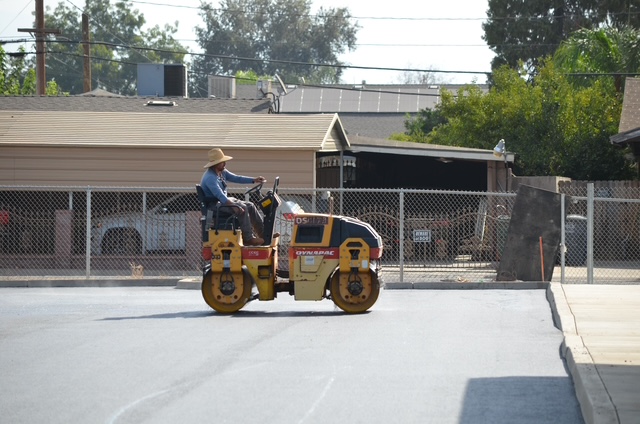
Routine sealcoating extends the life of the pavement significantly, protecting it from oxidation and water damage. This small investment every few years keeps the surface looking brand new, whereas old concrete often looks stained and weathered.
Repairability and Climate
Another financial advantage of asphalt is the ease of repair.
If a section of your parking lot develops a pothole or crack, our aspahlt repairs team can fix that specific area seamlessly.
Concrete, on the other hand, is rigid. In the Central Valley, temperature fluctuations can cause concrete slabs to heave and crack. Repairing a concrete slab often means removing and pouring the entire section, which is a costly endeavor. Asphalt is flexible, allowing it to expand and contract with the weather, making it the superior choice for durability in diverse climates.
Commercial Considerations
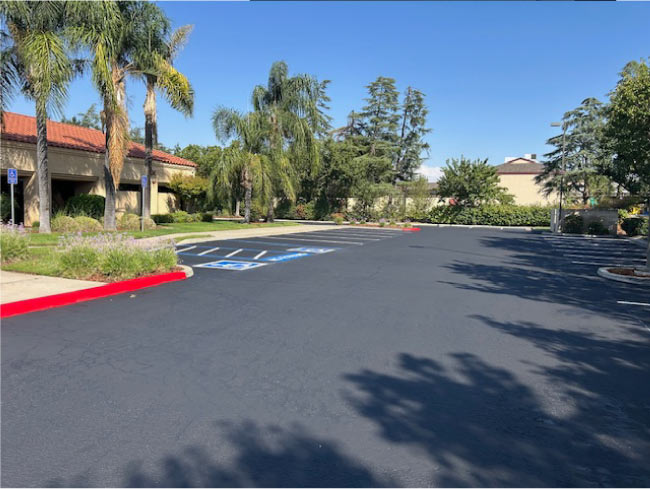
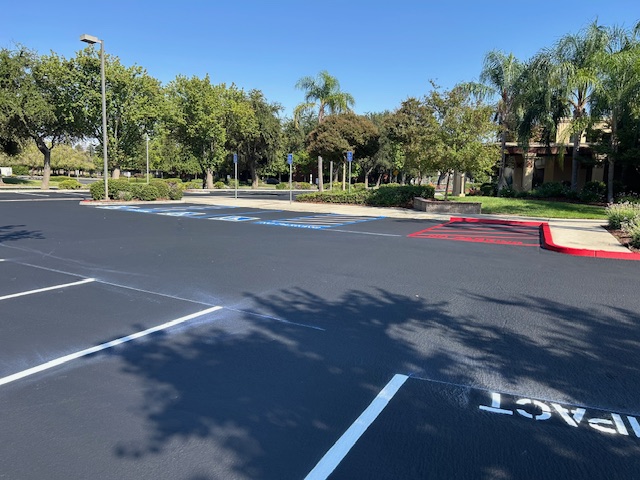
For business owners, the appearance of your property directly impacts your brand. A fresh, black asphalt surface provides high contrast for Parking Lot Striping, making your lot look organized and safe.
Additionally, the quick installation time of asphalt means less downtime for your business. You won’t have to block off customer entrances for weeks while the pavement cures. Whether you are managing small retail centers or massive Parking Lots, the combination of low installation costs and minimal disruption makes asphalt the economically smart choice.
The Importance of Site Preparation
Regardless of which material you choose, the longevity of your pavement depends on what lies beneath it. Cutting corners on the foundation will lead to failure for both asphalt and concrete.
Professional Excavation and Grading are critical steps. We ensure the sub-base is stable and properly sloped to handle drainage. Without this preparation, water will pool under the surface, destroying your investment regardless of the material cost.
Sustainability and Recycling
For environmentally conscious property owners, asphalt offers another hidden value: recyclability. It is one of the most recycled materials in the world.
When we remove old pavement, it is often crushed and reused, keeping costs down and reducing landfill waste. You can learn more about the environmental benefits and recycling statistics of asphalt pavement.
Making the Right Choice with Denny McCowan
So, is asphalt cheaper than concrete? Yes, it offers a lower upfront cost, easier repairs, and a faster installation time. However, the best value comes from a high-quality installation.
Denny McCowan General Engineering Inc. has been the Central Valley’s trusted partner since 2001.
We don’t just pour pavement; we engineer solutions. From the initial grading to the final striping, our family-owned business ensures your investment is built to last. Contact us today to discuss your project and get a fair, transparent quote.
Frequently Asked Questions (FAQs)
How much cheaper is asphalt than concrete on average?
Typically, asphalt costs about 40% to 60% less per square foot than concrete. The price varies based on the current cost of oil (for asphalt) and local labor rates, but asphalt is consistently the more budget-friendly option for large surfaces.
Which pavement lasts longer: asphalt or concrete?
Concrete generally has a longer lifespan, often lasting 30 to 40 years with minimal maintenance. Asphalt typically lasts 20 to 30 years, but its lifespan can be significantly extended with regular sealcoating and proper maintenance.
Does asphalt increase property value?
Yes, a paved asphalt driveway is a significant upgrade over gravel or dirt. It improves curb appeal, reduces dust, and provides a clean, stable surface, all of which are attractive to potential buyers and appraisers.
Can you pave asphalt over existing concrete?
Yes, this is called an overlay. If the existing concrete is stable and not crumbling, asphalt can be laid on top of it. This saves the cost of excavation, though special preparation is needed to ensure the layers bond.
Is asphalt better for cold climates?
Generally, yes. Asphalt is flexible, meaning it can expand and contract with temperature changes without cracking as easily as concrete. Furthermore, the black color absorbs heat from the sun, helping snow and ice melt faster in winter.